
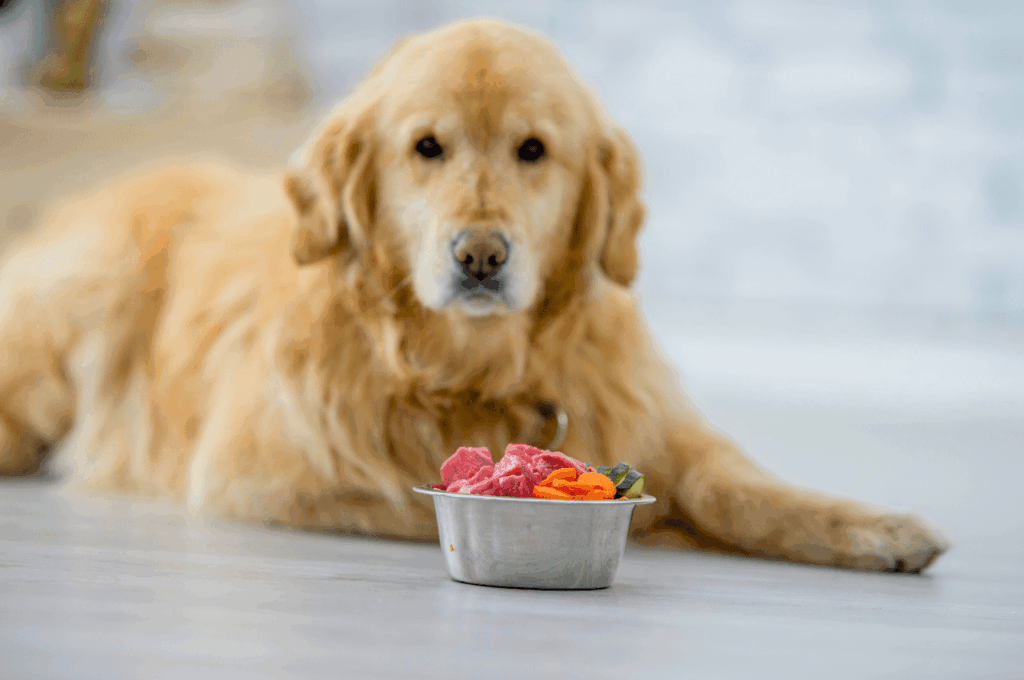
Is cooked food ultimately the best choice for my dog's health?
Cooked food is a natural way of eating. Natural nutrition can be considered the best choice for our dog's health, provided that it is done correctly. This means that it will consist of complete and balanced recipes, designed by trained scientific staff, to ensure that our dog's nutritional needs are covered 100%.
What are the advantages of natural nutrition?
The advantages of proper natural nutrition are many. First of all, due to the absence of intense heat treatment, the food is absorbed to the maximum extent by the dog's body (absorption rate 90-95%, in contrast to industrialized foods that are absorbed at a rate of up to approximately 75%). It also offers us the opportunity to have a complete picture of the ingredients we give our dog, in contrast to industrialized foods, where the ingredients are not visible and, necessarily, we only know them through the product label. Finally, it is particularly tasty, resulting in our dog enjoying it more, something extremely "convenient" for dogs with selective appetites.

Here we should note that Natural nutrition is not just about cooking, but also the raw (type BARF). Both types have their benefits and their points of attention. Depending on the individual needs of each animal, we can choose which of the 2 types is appropriate for its case (e.g. in a dog whose body does not tolerate the high percentage of meat we will prefer cooked food, while, conversely, in a dog with intolerance to the high percentage of carbohydrates we will prefer raw food).
Can he eat the same cooked food as us?

It depends on the food. Most natural foods are safe for dogs. The exception is certain foods that are considered toxic because they contain substances that the dog's body does not metabolize adequately, such as chocolate, grapes and Macadamia nuts. Beyond that, the cooking method also plays a role, for example, a dish with sauce and spices will disturb our dog's digestive system. In general, in order for a cooked meal to be suitable for our dog, it should be low in fat and salt, not contain sugar and be free of sauces and spices, which are likely to irritate his stomach.
What ingredients should a dog's diet contain?
A cooked composition for our dog should contain at least one source of protein, one or two sources of carbohydrates and an oil. Beyond that, we can enrich it with as many ingredients as we wish, in order to achieve a complete and balanced result. Alternatively, we will need a nutritional supplement.
Sources of protein are various meats, eggs, dairy products and some plant foods (peas, lentils, etc.). Sources of carbohydrates are rice, bulgur, quinoa, potatoes, sweet potatoes and various other vegetables such as carrots, broccoli, spinach, etc. As for oils, we usually use olive oil, sunflower oil, linseed oil or some fish oil.
What we need to keep in mind is that each food has a different nutritional profile, and therefore a different benefit for the body, which is why a variety of ingredients is desirable. However, not all foods are suitable for all animals, especially in the case of a disease.

How do dogs' nutritional needs differ?
Nutritional needs vary mainly based on age (puppy/adult/senior animal), life stage (pregnancy, lactation), activity level and the presence of any condition (e.g. kidney disease).
A puppy has increased needs for protein, fat and calcium, while an elderly animal needs more fiber, due to the possible atony of its intestine. A nursing animal needs a much larger amount of food and calories, in order to cover the nutritional needs of newborn puppies. A dog with a low level of activity (up to 1 hour per day) has fewer caloric needs than a dog with intense exercise. Finally, each condition has its own strict nutritional requirements for protein, fat and other nutrients.
Do their dietary needs and habits change depending on the season?
To a certain extent, yes. In the months when the ambient temperature is increased, especially in the summer, the appetite for food decreases and the need for water increases. On the other hand, in the seasons when the temperatures are low, the daily calorie requirements increase, due to the body's priority for sufficient heat. Also, fluctuations in ambient temperature also affect hair loss. Therefore, depending on the season, the dog may have increased requirements for nutrients that strengthen the coat, such as omega-3 fatty acids.
If someone can't cook for their dog, is there a good alternative?
Of course. There are companies in Greece that manufacture cooked dog food. Commercial cooked food is a good alternative for cases where our free time is limited. However, we must keep in mind that most commercial cooked foods are mainly aimed at healthy animals. A dog with allergies may respond positively to a commercial cooked food, but there are other conditions for which natural food alone is not enough to solve the problem. Especially for dogs with kidney disease, liver failure or urolithiasis, most commercial foods are not suitable, and therefore, the only way is to design a personalized homemade composition.
Dog snacks, how much can we give?
A complete commercial food is designed to cover our pet's needs, as long as we feed it exclusively in the amount indicated on the package. The more treats we give, the more we "cancel" it, because we are not allowing it to function as it was designed to.

Fortunately, there is a “golden rule” that says that “if out of 100 calories that an animal receives daily, a maximum of 10 come from treats, then the balance of the main food is not affected”. In other words, daily treats should correspond to 10% of our dog’s daily calorie intake. From this it follows that the lower in calories (light) a treat is, the greater the quantity we can give.
As for how healthy commercial packaged treats are, it depends on their composition. Generally speaking, the more natural the ingredients and the less heat treatment they have undergone, the healthier the treat is.
Does a dog need nutritional supplements?
Whether an animal needs a nutritional supplement in its daily diet depends on the organism itself and, of course, on its diet. If the animal is fed a complete commercial food, then the organism is considered to be covered as far as the basic nutritional needs are concerned and, theoretically, it does not need any nutritional supplement. If the animal does not eat commercial food, for example if its guardian makes homemade food (raw or cooked), then it is likely that some supplements need to be added to the diet, since it is impossible to cover all the nutritional requirements from a daily homemade recipe. How many and which supplements will be needed depends on the deficiencies of each recipe.
Also, even if the animal's diet is complete, there may be a special requirement, such as, for example, sensitive joints, severe hair loss or intense physical activity. This means that the body's needs for some nutrients are higher than the basic ones and a nutritional supplement may be necessary.
Can a dog be Vegan?
Dogs are omnivores and can, under certain conditions, adapt to a complete and balanced vegetarian diet. However, special care is required because, although all the necessary ingredients are found in plant sources, they are not utilized in their bodies like their animal counterparts. A typical example is the Omega-3 fatty acids, which are found in oils of both animal (fish oils) and vegetable (linseed oil) origin. Dogs need the Omega-3 fatty acids EPA and DHA, which are found in fish oils (e.g. salmon oil). Linseed oil is rich in the Omega-3 fatty acid ALA, which the dog cannot convert into EPA and DHA in order to benefit from it. Therefore, flaxseed oil cannot be considered a valuable source of Omega-3 fatty acids for dogs.

If someone wants to start a vegetarian diet for their pet, the initial question is whether they prefer a ready-made commercial industrialized food (e.g., dry food or canned food) or a homemade cooked food. In the case of dry food or canned food, there are several options for complete vegetarian foods for dogs and cats on the market. In the case of a homemade diet, the contribution of a specialist is necessary in order to ensure a complete and balanced result.
When should I visit a dog nutritionist?
Just like us, nutrition is the key to good health in animals. With a complete and balanced diet, we can either prevent diseases, such as obesity, or completely eliminate them, such as food allergies. Therefore, in a sick animal, the reason for the visit is to find the appropriate diet for its case, while in a healthy one, the evaluation of the current diet in terms of the type and quantity administered.
Dog nutritional assessment process
The nutritional assessment of a dog is carried out by a veterinarian and includes taking a detailed history to identify nutritional risk factors, i.e. signs that indicate that the pet has specific nutritional requirements, such as growth, advanced age, food changes or a condition. Then, we proceed to weigh the animal and assess its nutritional status. By palpating the animal in specific points, we can assess any deviation from ideal body weight and any muscle loss. With all this data, we are able to calculate the animal's daily calorie needs and draw up a personalized nutrition plan.
2 Tips from a dog nutritionist for better dog health
The first tip concerns natural nutrition. In my professional opinion, a properly designed natural diet is the best thing for our dog's health. However, even if this is not possible (e.g. in terms of cost, time, etc.), we can at least invest as much as possible in natural options in treats, as a healthy natural "boost" of our dog's immune system!
The second concerns information management. The animal nutritionist in our country is not an “officially registered” profession (like the human nutritionist), as a result of which it can be declared as a “qualification” by anyone, regardless of scientific training. This “gray spot” in the definition of the profession, combined with the abundance of misinformation on the internet regarding animal nutrition, often results in receiving incorrect nutritional guidance and risking the health of our dog. Therefore, my advice is that when we search for articles on the internet or a professional nutritionist for our dog, we should first ask ourselves whether the training and scientific background of the article writer/professional are sufficient to entrust them with the health of our dog.


